

FENCING
UPCOMING EVENTS & COMPETITIONS
14–16 AUGUST 2026
Navy Open Fencing Championships
Bangkok, Thailand
An open tournament offering foil, épée and sabre categories for U10, U12, U14, senior and veteran fencers, with individual and team competition. No cash prize fund has been published.
15–16 AUGUST 2026
Cup of Herkules
Kassel, Germany
An international épée tournament with men’s and women’s divisions across youth, junior and senior age groups. Entries are made through a fencing club or organisation and close on 8 August. No prize money is currently listed.
29 AUGUST 2026
Beach Fencing Championships
Gahlkow, Germany
An unusual open international épée competition offering men’s and women’s individual and team events near the Baltic coast. Club-based entries close on 24 August. No cash prize fund has been announced.
Competition dates and arrangements may change. Confirm details with the event organiser before attending.
FENCING
Fencing is a fast, technical combat sport built around timing, distance, footwork and controlled attack. Two fencers compete on a narrow strip called a piste, trying to score touches with one of three weapons: foil, épée or sabre. It looks elegant from the outside, but underneath it is a sharp mix of speed, reaction time, balance, tactics and discipline.
Modern fencing is an Olympic sport governed internationally by the FIE. The three Olympic weapons are foil, épée and sabre, with men’s and women’s events across individual and team competition.
.png)
FENCING EQUIPMENT
Fencing is a one-on-one sport where athletes try to land valid touches while avoiding being hit themselves. The sport rewards quick thinking as much as physical speed. A good fencer has to read an opponent, control distance, disguise attacks, defend accurately and choose the right moment to strike.
There are three main weapons:
-
Foil: a light thrusting weapon. Touches are scored with the point on the valid target area, mainly the torso. Foil uses right-of-way rules.
-
Épée: a heavier thrusting weapon. The whole body is target area, and both fencers can score at the same time if they hit together.
-
Sabre: a cutting and thrusting weapon. Touches can be scored with the edge or point, usually above the waist. Sabre is very fast and also uses right-of-way rules.
Fencing is accessible to children, adults, university students, veterans and para athletes. It is especially strong as a school or club sport because beginners can learn safely with controlled equipment, clear supervision and structured progression.

Fencing takes place on a long, narrow strip called a piste. Under FIE rules, the piste is 14 metres long, with on-guard lines 2 metres from the centre and warning areas near the back line. The standard competition layout is designed so fencers have room to advance, retreat and recover without the bout becoming a scramble.
A basic fencing setup includes:
-
Piste / strip: the marked area where the bout takes place.
-
Centre line: the middle of the piste.
-
On-guard lines: where fencers begin after the referee calls them to start.
-
Rear warning lines: marks that warn a fencer they are near the back limit.
-
Scoring box: electronic scoring equipment used in modern competition.
-
Body wires and weapon wires: connect the fencer and weapon to the scoring system.
-
Referee position: the referee controls the bout, applies rules and awards touches.

Standard Equipment
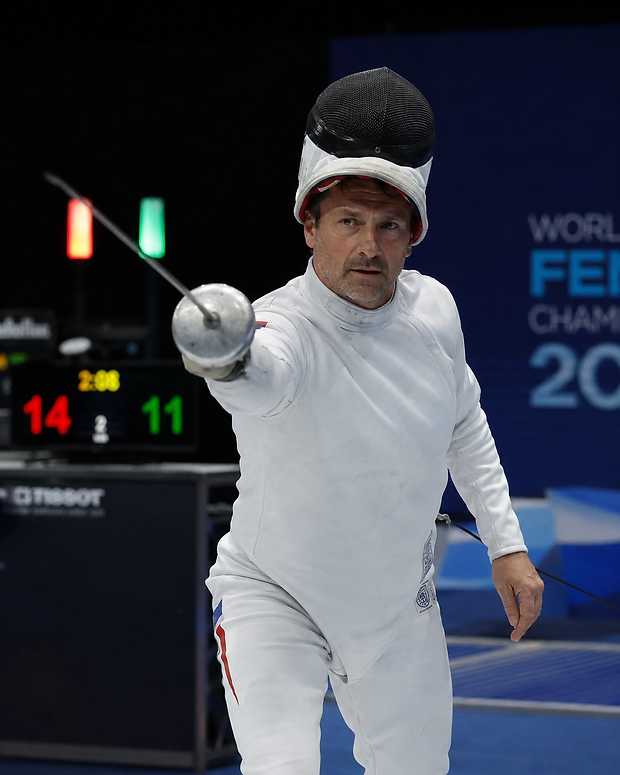
A fencer wears protective clothing and uses weapon-specific scoring equipment. FIE and national competitions have detailed equipment standards, and equipment is checked more strictly at higher levels. The FIE has current rule documents covering technical rules, organisation rules and material rules.
Typical fencing equipment includes:
-
Mask: protects the head and face.
-
Jacket: padded protective upper-body clothing.
-
Plastron: extra underarm protection worn beneath the jacket.
-
Glove: worn on the weapon hand.
-
Breeches: protective trousers ending below the knee.
-
Long socks: cover the lower legs.
-
Fencing shoes: designed for lunging, pushing and retreating.
-
Weapon: foil, épée or sabre.
-
Lame: conductive over-jacket used in foil and sabre to register valid target areas.
-
Body wire / mask wire: connects the fencer to the electronic scoring system.

Simple Rules of Fencing
-
Two fencers face each other on the piste.
-
The referee starts the action with commands such as “On guard”, “Ready?” and “Fence”.
-
A touch is scored when a valid hit is made with the weapon.
-
In foil, only the torso is the main target, and right-of-way decides who scores if both fencers hit.
-
In épée, the whole body is target, and both fencers can score if they hit at nearly the same time.
-
In sabre, the target is generally above the waist, and hits can be made with the edge or point of the blade.
-
Fencers use attacks, parries, ripostes, feints, footwork and changes of distance.
-
The referee stops action with “Halt”.
-
In many individual direct-elimination bouts, the target is 15 touches over a maximum of three three-minute periods. Shorter poule bouts commonly use fewer touches.
-
Penalties can be given for unsafe fencing, incorrect equipment, stepping off the piste, delaying the bout or failing to obey the referee.
Income & Career Possibilities
Fencing can create income in several ways, but the strongest routes usually depend on country, club access, coaching demand and competition level. A small number of fencers can earn through elite competition, national funding, sponsorship and Olympic or world-level pathways. For most people, the more realistic routes are coaching, club work, refereeing, armoury work, school programmes, university fencing, event organisation, equipment sales, content creation or specialist support services.
Player Pathway
-
Starting point: Most fencers begin through beginner courses, school clubs, university clubs, community fencing clubs, holiday sessions or taster events.
-
Progression route: Recreational fencing can lead to local competitions, regional events, national rankings, age-group championships, university competition, international selection and elite programmes.
-
Skills needed: Footwork, balance, timing, distance control, fast reactions, concentration, tactical reading, weapon control, discipline and good movement under pressure.
-
How it pays:
-
Winnings: Prize money from some competitions, usually limited outside the highest levels.
-
Funding: National sport funding, Olympic pathway support, grants or athlete bursaries where available.
-
Sponsorship: Equipment brands, clubs, local businesses, personal sponsors or performance partners.
-
Coaching income: Strong competition results can help a fencer sell lessons, clinics or training camps.
-
Appearance income: Demonstrations, school visits, club visits, media work or exhibition bouts.
-
-
Reality check: Most fencers will not earn a full-time living from competition alone. At amateur and semi-professional level, competition is often used to build credibility for coaching, selection, sponsorship, university sport or wider fencing work.
Coaching and Training Pathway
-
Starting point: A future coach may begin by helping beginners, assisting at club sessions, supporting school fencing, running warm-ups or helping younger fencers practise basic footwork and blade work.
-
Progression route: Coaching can grow into private lessons, group coaching, school programmes, club coaching, weapon-specific coaching, holiday camps, university coaching, performance squads and online technical analysis.
-
Skills needed: Clear teaching, safe session control, footwork instruction, blade technique, rules knowledge, tactical understanding, patience, safeguarding awareness and the ability to coach different ages and ability levels.
-
How it pays:
-
Session fees: One-to-one lessons, group sessions, beginner courses and weapon-specific classes.
-
Salary or contract work: Paid roles with clubs, schools, universities, leisure centres or academies.
-
Business income: Camps, clinics, online courses, video analysis, training plans and membership communities.
-
Add-on income: Equipment advice, club workshops, competition preparation, grading support or tournament coaching.
-
-
Reality check: Coaching is likely to be one of the strongest income routes in fencing because the sport is technical, equipment-based and difficult for beginners to learn properly without structured instruction.
Refereeing and Officiating Pathway
-
Starting point: Referees usually begin by learning the rules properly, helping at club competitions, scoring bouts, judging simple actions and taking an introductory officiating course.
-
Progression route: Officials can move from club events to regional competitions, national events, international competitions and weapon-specific refereeing appointments.
-
Roles included: Referee, piste official, competition marshal, scorer, bout committee member, event desk official, technical official and tournament supervisor.
-
Skills needed: Rules knowledge, calm decision-making, confidence, accuracy, attention to detail, understanding of right-of-way, weapon rules, penalties, timing and score control.
-
How it pays:
-
Match or day fees: Paid officiating at competitions where budgets allow.
-
Expenses: Travel, food or accommodation support for events.
-
Event work: Larger competitions may pay experienced officials for full-day or multi-day work.
-
Side income: Officiating can sit alongside coaching, club management, competition organisation or armoury work.
-
-
Reality check: Early officiating may be voluntary or expenses-only. Paid opportunities become more realistic as the official gains experience, reliability and higher-level appointments.
Armoury, Equipment and Technical Support Pathway
-
Starting point: This route often begins by repairing personal kit, helping club members fix weapons, checking body wires, learning how scoring boxes work and understanding basic equipment safety.
-
Progression route: It can develop into club armoury work, competition equipment checks, weapon repair, scoring-system setup, event support, kit sales, supplier work or specialist technician roles.
-
Roles included: Armourer, weapon repairer, scoring-box technician, equipment checker, club kit manager, event technician, supplier assistant and fencing retail specialist.
-
Skills needed: Practical repair skills, patience, electrical basics, attention to detail, knowledge of weapon parts, safety standards, competition requirements and the ability to work quickly under event pressure.
-
How it pays:
-
Repair fees: Rewiring weapons, replacing tips, fixing body wires, repairing sockets or maintaining club equipment.
-
Event income: Paid technical support at competitions and club events.
-
Retail income: Selling weapons, masks, jackets, gloves, wires, lame jackets and replacement parts.
-
Club contracts: Maintaining shared club equipment, school kits or beginner sets.
-
-
Reality check: Fencing has more technical equipment than many sports, so good armourers and equipment technicians can become very valuable locally. It may not start as a full-time income, but it can become a strong specialist sideline or small business.
Club, Venue and Event Management
-
Starting point: This route often begins with organising club nights, collecting fees, booking halls, setting up pistes, managing kit, helping with membership records or supporting local competitions.
-
Progression route: The pathway can develop into club management, school fencing programmes, university club administration, regional competition organisation, event direction, venue coordination or opening a dedicated fencing club.
-
Roles included: Club organiser, club secretary, session coordinator, bookings manager, competition organiser, event director, membership officer, safeguarding lead, equipment manager and facility manager.
-
Skills needed: Organisation, scheduling, budgeting, venue booking, safeguarding, insurance awareness, communication, volunteer management, equipment control and the ability to work with fencers, parents, coaches and officials.
-
How it pays:
-
Salary: Paid roles with clubs, schools, universities, leisure centres, academies or governing bodies.
-
Event income: Entry fees, ranking events, open competitions, beginner days, camps and corporate sessions.
-
Business income: Membership fees, hall-hire margins, private lessons, school contracts, equipment rental or kit sales.
-
Commission or admin fees: Managing coaches, events, bookings, memberships or club programmes.
-
-
Reality check: This can become one of the best long-term business routes where local demand is high but organised fencing sessions are limited. The opportunity is not just fencing, but building the place where other people learn and compete.
Media, Education and Specialist Support
-
Starting point: This route begins by solving useful problems around the sport: explaining the rules, filming bouts, photographing events, creating beginner guides, reviewing equipment, covering competitions or helping clubs promote sessions.
-
Progression route: It can develop into YouTube, TikTok, Instagram, blogs, podcasts, newsletters, match coverage, livestreaming, commentary, club media, school resources, photography, videography, equipment retail or sponsorship support.
-
Roles included: Content creator, photographer, videographer, commentator, fencing writer, equipment reviewer, club media officer, sponsor coordinator, livestream producer, educator and sports support specialist.
-
Skills needed: Communication, filming, editing, writing, product knowledge, rules knowledge, storytelling, search awareness, basic marketing and a practical understanding of what beginners want to know.
-
How it pays:
-
Advertising: YouTube, blogs, newsletters or website traffic.
-
Sponsorship: Brands, clubs, venues, competitions or local businesses.
-
Affiliate income: Masks, weapons, gloves, bags, jackets, shoes, scoring kit or training-aid recommendations.
-
Retail income: New or second-hand fencing equipment.
-
Freelance fees: Photography, video, livestreaming, event coverage, social media or club promotion.
-
Salary: Possible with larger clubs, brands, governing bodies, schools, universities, media companies or professional organisations.
-
-
Reality check: This route works because fencing is visually striking but often confusing to beginners. A useful creator does not need to be the best fencer. They need to be helpful, accurate, consistent and visually clear.

FENCING ORGANISATIONS
& LEAGUES
Here is a non-exhaustive set of organisations involved with Fencing worldwide.
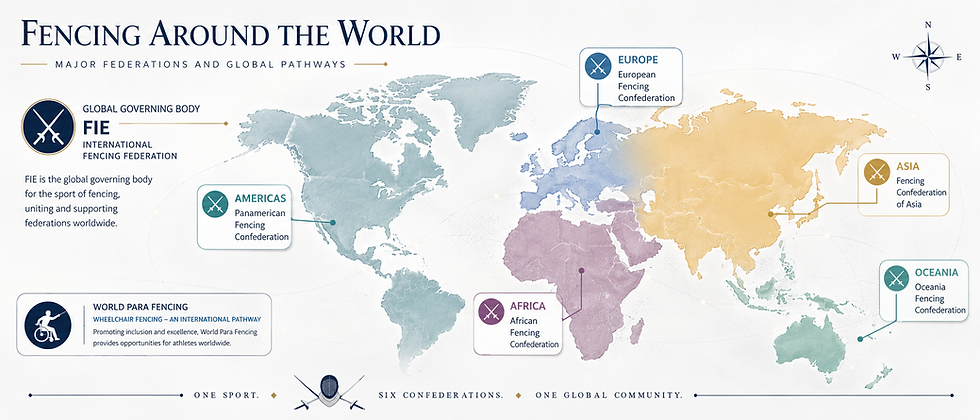
Fencing has a strong international structure, but it does not usually work like a weekly league sport. In most countries, the normal route is through clubs, school fencing, university fencing, open competitions, regional events, national championships, ranking circuits and international selection. The FIE is the global governing body for Olympic fencing, with national federations recognised as the official representatives for fencing in their countries.
A beginner should not search only for “fencing leagues,” because that may miss the real entry route into the sport. The better search is for fencing clubs, beginner fencing courses, school fencing, university fencing, regional opens, national federation membership, coaching courses, referee courses, armoury training and local competitions.
Because fencing needs protective kit, weapons, scoring equipment and safe supervision, the most important first step is finding a club or session that understands proper equipment, safety, beginner coaching and competition rules. A good beginner club should explain the difference between foil, épée and sabre, provide safe starter equipment where possible, and offer a clear route into friendly bouts before formal competition.
-
International Fencing Federation / Fédération Internationale d’Escrime
-
The FIE is the world governing body for Olympic fencing.
-
It oversees international rules, rankings, major competitions, world championships, Olympic fencing structures and the global federation network.
-
It is the main reference point for foil, épée and sabre at international level.
-
Best for: international rules, Olympic fencing, world rankings, major championships, athlete lookup and national federation routes.
-
-
World Para Fencing
-
World Para Fencing is the international route for wheelchair fencing and para fencing competition.
-
It covers competition rules, equipment, classification, coaching, refereeing and wheelchair fencing development.
-
Para fencing uses foil, épée and sabre, but athletes compete from fixed wheelchair frames rather than moving up and down a full-length piste.
-
Best for: wheelchair fencing, disability sport pathways, Paralympic fencing, classification, coaching and inclusive competition.
-
-
European Fencing Confederation
-
The European Fencing Confederation supports fencing across Europe.
-
It is useful for European tournaments, rankings, referees, coaches, documents, member countries and development activity.
-
European fencing is especially important because many of the strongest fencing nations, clubs and competition pathways are based in Europe.
-
Best for: European competitions, continental rankings, cadet and junior routes, senior events, refereeing and European federation information.
-
-
Fencing Confederation of Asia
-
The Fencing Confederation of Asia supports and develops fencing across the Asian region.
-
It is useful for Asian championships, regional rankings, national federation links and continental development.
-
Asia is important in fencing because several countries have strong Olympic, university and youth fencing systems, and the sport has room to grow further across large population markets.
-
Best for: Asian fencing development, regional championships, national federation routes, rankings and emerging fencing markets.
-
-
Panamerican Fencing Confederation
-
The Panamerican Fencing Confederation is the continental structure for fencing across the Americas.
-
It connects national federations into Pan American competition, education, coaching and development work.
-
Readers in North, Central and South America should usually start with their national federation, then look at Pan American events if they are moving toward higher-level competition.
-
Best for: American continental competition, national federation links, youth development, coaching support and regional championships.
-
-
African Fencing Confederation / Confédération Africaine d’Escrime
-
The African Fencing Confederation supports fencing development and competition across Africa.
-
It connects African national federations with continental championships, international competition structures and FIE development routes.
-
In some African countries, fencing is still growing, so the practical route may depend heavily on local clubs, schools, national federations and Olympic sport programmes. African senior championships include men’s and women’s foil, épée and sabre events.
-
Best for: African fencing development, national federation links, continental championships, emerging clubs and Olympic pathway growth.
-
-
Oceania Fencing Confederation
-
The Oceania Fencing Confederation supports fencing across the Oceania region.
-
It is useful for regional championships, events, development information and links between fencing communities in countries such as Australia, New Zealand and nearby island nations.
-
Oceania has a smaller fencing population than Europe or North America, so regional competition and national federation connections are especially important.
-
Best for: Oceania competitions, regional development, smaller fencing nations, national federation links and competition opportunities.
-
-
British Fencing
-
British Fencing is the national governing body for fencing in Great Britain.
-
It supports clubs, membership, safeguarding, volunteer management, national championships, home nation participation and club finding.
-
It is one of the most practical starting points for UK readers because it links beginners to clubs, membership, coaching information, competitions and national pathways.
-
Best for: UK clubs, beginner sessions, safeguarding, membership, national competitions, coaching, refereeing and GB pathway information.
-
-
USA Fencing
-
USA Fencing is the national governing body for fencing in the United States.
-
It is useful for clubs, sanctioned events, domestic rules, membership, rankings, education, referee information and international selection information.
-
The United States has a large fencing structure, with strong youth, school, college, club and national competition pathways. USA Fencing’s rulebook applies to sanctioned events in the United States and incorporates FIE rule changes.
-
Best for: American clubs, youth fencing, sanctioned events, national rankings, referee development, collegiate fencing and Olympic pathway information.
-

PROMOTE YOUR EVENT TO THE RIGHT SPORTS AUDIENCE
Contact us with your event details, and we can help feature suitable events on the most relevant sports page for our visitors.
SIMPLE PROCESS
Send us the event name, date and location.
RELEVANT PLACEMENT
We help match your event to the right sports audience.
EXTRA VISIBILITY
Give your event more exposure to interested visitors
(Subject to fees)