

MIXED MARTIAL ARTS
UPCOMING EVENTS & COMPETITIONS
9 AUGUST 2026
Australian Pankration Championships
Sydney, Australia
An open multi-discipline competition including amateur MMA-style pankration, kickboxing and grappling divisions. Prize money is not currently listed.
27 SEPTEMBER 2026
BMMAF Amateur League Qualifier
Wavre, Belgium
Open to Belgian and international amateur fighters, although Belgian entrants receive priority. Each tournament winner receives €500, with national-team selection opportunities for eligible Belgian fighters.
3 OCTOBER 2026
Leitrim Novice MMA Championships
Carrick-on-Shannon, Ireland
A competition created specifically for novice MMA fighters, making it the clearest entry-level event of the three. Registration is available, but prize money is not listed.
Competition dates and arrangements may change. Confirm details with the event organiser before attending.
MIXED MARTIAL ARTS
Mixed martial arts brings striking, grappling and ground fighting together in one demanding combat sport. Competitors must learn how to box, kick, wrestle, defend takedowns, control position and finish a contest through strikes or submission.
MMA can lead into amateur competition, professional fighting, coaching, officiating, event promotion, media work and specialist roles in fitness, nutrition and athlete support. It rewards discipline, adaptability and the ability to remain calm under pressure.
MIXED MARTIAL ARTS RING

The MMA Fighting Area
Mixed martial arts is usually contested inside a fenced fighting area commonly called a cage. Although the best-known design has eight sides, MMA enclosures can vary in shape and size, and some competitions are held in a traditional roped ring. The diagram shows a typical octagonal arrangement rather than a single compulsory design.
The floor is a firm, level platform covered by protective padding and a tightly fitted canvas. It must provide enough grip for striking and footwork while remaining suitable for throws, takedowns and prolonged ground fighting. There should be no loose material, raised edges or objects that could catch a fighter’s foot.
A strong mesh fence surrounds the entire contest area. Unlike the ropes of a boxing ring, the continuous fence prevents competitors from falling through the boundary during wrestling exchanges. Fighters may be pressed against it while defending takedowns, escaping holds or working from the clinch, making the edge of the cage an active part of MMA competition.
The fence posts, rails, gate frames and other hard surfaces are heavily padded. Entry gates allow the fighters, referee, medical staff and officials to enter the enclosure and must remain securely closed during each round. Depending on the venue, the cage may stand directly on the floor or on a raised platform reached by steps or a ramp.
Outside the enclosure are the judges, timekeeper, medical team, inspectors, camera operators and the fighters’ corners. Between rounds, the competitors return to their assigned corners, where their coaches and cut team can enter briefly before leaving the cage for the next round.
Exact dimensions vary between promotions and regulating authorities. Under commonly used commission specifications, professional fighting areas may range from approximately 18 to 32 feet across, with a padded floor, protected metalwork and fencing designed to prevent a competitor from falling out.
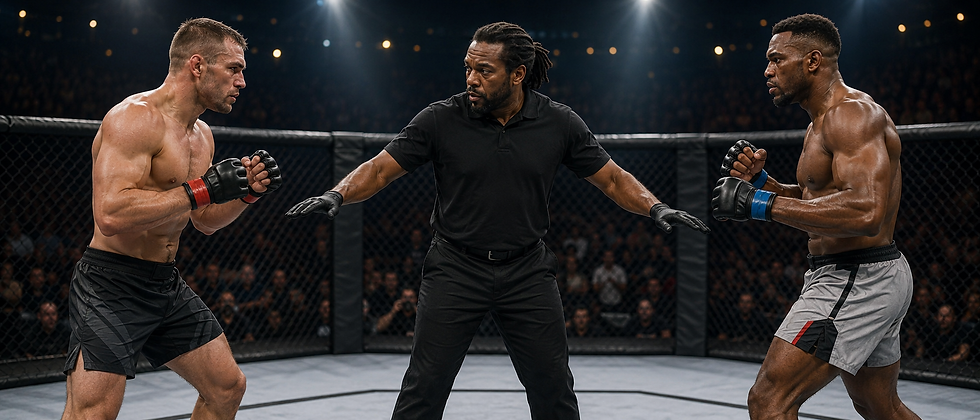
Fighting and Grappling in MMA
MMA combines striking, wrestling and submission grappling. Fighters may attack while standing, work from the clinch, take an opponent to the ground and continue fighting from there.
Standing Techniques
Common standing attacks include:
-
Punches to the head and body
-
Kicks to the legs, body and head
-
Knees from range or the clinch
-
Elbows where the rules allow them
-
Spinning strikes
Professional contests usually allow more techniques than amateur MMA.
Clinch Fighting
The clinch is close-range fighting, often against the cage. Fighters may use:
-
Underhooks and overhooks
-
Body locks and collar ties
-
Short punches and knees
-
Trips and foot sweeps
-
Cage pressure and takedown attempts
Fighters may use the cage for positioning, but cannot grab the fence.
Takedowns and Throws
Common takedowns include:
-
Single-leg and double-leg takedowns
-
Body-lock takedowns
-
Trips and sweeps
-
Hip throws
-
Suplex-style throws
Deliberately driving an opponent straight onto the head or neck is illegal.
Ground Positions
Once the fight reaches the floor, both fighters continue working. Common positions include:
-
Guard
-
Half guard
-
Side control
-
Mount
-
Back control
-
Turtle position
The fighter on top may strike or look for a submission. The fighter underneath may defend, escape, reverse the position or attack from guard.
Ground Striking
Ground striking is commonly called ground and pound. Fighters may use punches and, under some professional rules, elbows against legal target areas.
Kicks and knees to the head of a grounded opponent are normally illegal.
Submissions
Submissions are used to force an opponent to tap or verbally submit.
Common chokes include:
-
Rear-naked choke
-
Guillotine choke
-
Triangle choke
-
Arm-triangle choke
Common joint locks include:
-
Armbar
-
Kimura
-
Americana
-
Ankle lock
-
Kneebar
Some leg locks and neck submissions are restricted in amateur competition.
Amateur MMA
Amateur rules are generally more restrictive than professional rules. Elbows, knees to the head, heel hooks and some neck or leg submissions may be prohibited.
Youth MMA has additional restrictions based on age and experience.
Illegal Techniques
Common fouls include:
-
Headbutting, biting and eye gouging
-
Groin attacks
-
Strikes to the throat, spine or back of the head
-
Kicking or kneeing the head of a grounded opponent
-
Stomping a grounded fighter
-
Twisting individual fingers or toes
-
Holding the cage
-
Attacking after the referee has stopped the contest
Exact rules vary between promotions, federations and governing bodies.


Simple Rules of Mixed Martial Arts
-
Two fighters compete in the same weight division inside a fenced cage or approved ring.
-
Professional rounds last five minutes, with one minute of rest between rounds. A contest may have up to five rounds.
-
Fighters may use punches, kicks, knees, elbows, takedowns, throws, ground fighting and submission holds, provided the techniques hit legal target areas.
-
A fighter can win by:
-
Knockout, when the opponent cannot continue after legal strikes.
-
Technical knockout, when the referee, doctor or corner stops the fight.
-
Submission, when the opponent taps, verbally gives up or becomes unconscious in a legal hold.
-
Judges’ decision, when the scheduled rounds are completed.
-
Disqualification, following a serious or repeated foul.
-
Judges use the 10-point must system. The round winner normally receives 10 points and the other fighter receives nine or fewer. Effective striking and grappling are considered first, followed by effective aggression and control of the fighting area.
-
Fighters may continue attacking on the ground, but kicks and knees to the head of a grounded opponent are illegal. A fighter is grounded when any body part other than the hands or feet touches the canvas.
Common fouls include:
-
Headbutting, biting and eye gouging
-
Groin attacks
-
Strikes to the spine or back of the head
-
Throat attacks
-
Hair pulling
-
Grabbing the cage
-
Twisting individual fingers or toes
-
Spiking an opponent directly onto the head or neck
-
Attacking after the bell or referee’s stoppage
-
The referee controls the contest and may stop it whenever a fighter cannot defend themselves safely. The referee may also separate or stand up the fighters when neither is making a meaningful attempt to improve position or finish the fight.
-
Amateur and youth MMA usually apply additional safety restrictions, so the exact rules should always be checked with the event organiser or governing body.
Careers and Opportunities in MMA
MMA supports far more careers than professional fighting alone. Opportunities exist in athlete development, coaching, event promotion, regulation, media and specialist support. Most people begin through a local gym or amateur event circuit before building experience, qualifications and industry contacts.
Fighter
The most visible route is becoming an MMA competitor.
Most fighters begin by training in several disciplines, commonly boxing, kickboxing, wrestling, Brazilian jiu-jitsu or judo. They may first compete in individual combat sports before entering amateur MMA.
A typical route may include:
-
Joining a recognised MMA gym
-
Developing striking and grappling skills
-
Competing in interclub or amateur events
-
Building a competitive record
-
Turning professional when ready
-
Signing with larger promotions
-
Competing for rankings, titles and sponsorships
Income at the lower levels can be limited and inconsistent. Many developing fighters work alongside training and competition. Earnings may come from fight purses, win bonuses, sponsorships, coaching, seminars, appearances and social media.
Professional success depends on ability, fitness, discipline, matchmaking, promotion and the strength of the fighter’s team.
Best suited to: Competitive athletes who can manage pressure, injury risk, strict training schedules and uncertain income.
Coaching and Athlete Development
MMA fighters usually work with several coaches rather than one general instructor.
Coaching opportunities include:
-
MMA head coach
-
Boxing coach
-
Kickboxing or Muay Thai coach
-
Wrestling coach
-
Brazilian jiu-jitsu coach
-
Strength and conditioning coach
-
Youth or beginner instructor
-
Sparring and training partner
An MMA head coach brings the different disciplines together and prepares the overall fight strategy. Specialist coaches improve particular areas such as striking, takedowns, cage control, submissions or conditioning.
Coaches may work in established gyms, run private sessions, operate training camps or open their own facility. Additional income can come from seminars, online courses, corner work and athlete programmes.
A successful coach needs technical knowledge, communication skills and the ability to protect athletes from unnecessary training injuries.
Best suited to: Experienced martial artists who enjoy teaching, planning and developing other competitors.
Management, Promotion and Event Operations
Every MMA contest requires people to organise the fighters, venue, officials, audience and commercial activity.
Career opportunities include:
-
Fighter manager
-
Matchmaker
-
Event promoter
-
Gym owner
-
Promotion executive
-
Sponsorship manager
-
Ticketing or hospitality coordinator
-
Venue and event operations staff
-
Athlete relations officer
Fighter managers help arrange bouts, negotiate contracts, find sponsorship and guide career decisions. Matchmakers select suitable opponents and build competitive event cards.
Promoters take responsibility for the event itself. This can include hiring a venue, securing regulatory approval, arranging insurance, selling tickets, finding broadcasters and coordinating medical cover.
Smaller regional events can provide an entry point into promotion and event work, but organisers must understand safety, finance, licensing and fighter welfare.
Best suited to: Organised and commercially minded people who can manage budgets, relationships, deadlines and risk.
Officiating and Regulation
Officials protect the fairness and safety of the contest.
Important roles include:
-
Referee
-
Judge
-
Timekeeper
-
Rules official
-
Event inspector
-
Licensing administrator
-
Regulatory or commission staff
The referee works inside the cage and decides when to stop the contest. This requires detailed technical knowledge, fast judgement and the confidence to act immediately.
Judges score each round based mainly on effective striking and grappling. They must remain focused, impartial and familiar with the scoring criteria used by the governing authority.
Officials usually begin through training courses, shadowing, amateur events and smaller promotions. Requirements vary by country and may be controlled by a national federation, athletic commission or local licensing body.
Best suited to: Calm and observant people who understand combat sports and can make difficult decisions under pressure.
Media and Specialist Support
MMA also creates work for people who never compete inside the cage.
Media roles include:
-
Commentator
-
Presenter or interviewer
-
Sports journalist
-
Photographer
-
Videographer
-
Editor
-
Podcast or channel producer
-
Social media manager
-
Public relations officer
Specialist support roles include:
-
Sports doctor
-
Paramedic
-
Physiotherapist
-
Nutritionist
-
Sports psychologist
-
Cut person
-
Equipment supplier
-
Cage construction and production crew
-
Security and backstage staff
Some of these roles require formal professional qualifications, while others can be entered through practical experience and a strong portfolio.
Regional promotions, gyms and individual fighters often need reliable photographers, editors, designers and social media workers. This can provide a realistic entry route before moving into larger professional events.
Best suited to: Creative, technical or medically trained people who want to work around competitive MMA without becoming fighters.
Finding a Route into MMA
A practical starting point is to contact a reputable MMA gym or regional promotion. Attend events, speak to coaches and observe how the sport operates outside the contest itself.
Useful first steps include:
-
Training at an established gym
-
Volunteering at amateur events
-
Completing coaching or officiating courses
-
Building a photography, video or writing portfolio
-
Gaining first-aid or safeguarding qualifications
-
Working with developing fighters or smaller promotions
MMA remains a relationship-based industry. Reliability, professionalism and a good reputation are often as important as formal qualifications.
MIXED MARTIAL ARTS
ORGANISATIONS
& LEAGUES
Here is a non-exhaustive set of organisations involved with MMA worldwide.
MMA Organisations and Leagues
MMA does not have one worldwide league system. Amateur competition is usually organised through national federations, while professional fighters compete for privately operated promotions. The International Mixed Martial Arts Federation provides international amateur rules, championships and national federation pathways.
United States
Association of Boxing Commissions
The ABC helps athletic commissions maintain common MMA rules, safety standards and official training. Professional events are normally licensed by the commission responsible for the state or territory where they take place.
Best for: Regulation, refereeing, judging and professional event standards.
United States Fight League
The USFL develops junior and senior amateur MMA and is recognised by IMMAF as a national organisation for the United States.
Best for: Amateur competition and national-team development.
UFC
The Ultimate Fighting Championship is the world’s best-known professional MMA promotion. Fighters usually reach it after building experience and a strong record in smaller professional organisations.
Best for: Elite international professional competition.
Professional Fighters League
PFL operates international professional events and uses league, tournament and championship formats across several regional markets.
Best for: Established professional fighters and international competition.
United Kingdom
English Mixed Martial Arts Association
EMMAA develops England’s amateur pathway, national squads and entry into international championships.
Best for: English amateur fighters seeking structured national competition.
Cage Warriors
Cage Warriors is a long-running British-based promotion staging professional events across the UK, Ireland and continental Europe. It has become an important route for fighters progressing towards major international promotions.
Best for: Experienced amateurs and developing professional fighters.
British Fighting Championship
BFC runs professional, amateur and junior MMA contests and provides opportunities for emerging British fighters.
Best for: Regional competition and early career development.
Amateur fighters elsewhere in the UK should check the current IMMAF federation directory for the appropriate national pathway.
Europe
International Mixed Martial Arts Federation
IMMAF organises amateur world, continental, junior and youth championships and supports national federations across Europe and the wider world.
Best for: International amateur competition and national-team pathways.
KSW
KSW is a major Polish professional promotion known for large arena events, championship contests and leading European fighters.
Best for: Established professionals competing in Central and Eastern Europe.
OKTAGON MMA
Founded in the Czech and Slovak market, OKTAGON now stages professional MMA events across several European countries.
Best for: European professionals and fighters building a regional following.
ARES Fighting Championship
ARES is a French professional promotion centred around events in Paris and other French cities.
Best for: Fighters based in France and Western Europe.
Asia
ONE Championship
Singapore-based ONE Championship promotes MMA alongside Muay Thai, kickboxing and submission grappling.
Best for: High-level Asian and international martial artists.
RIZIN Fighting Federation
RIZIN is a leading Japanese promotion known for large events, elaborate presentation and MMA contests held in a roped ring under its own rules.
Best for: Professional fighters seeking competition in Japan.
ROAD FC
ROAD FC is a South Korean professional promotion that has helped develop domestic fighters and grow MMA within Korea.
Best for: Korean and East Asian professional prospects.
BRAVE Combat Federation
Based in Bahrain, BRAVE stages professional MMA events across Asia, Europe, Africa and other international markets.
Best for: Fighters seeking a promotion with a wide international event network.
Africa, Oceania and Latin America
EFC
Extreme Fighting Championship is a major African promotion headquartered in South Africa, featuring fighters from across the continent and overseas.
Best for: African professional fighters and regional prospects.
Eternal MMA
Eternal MMA stages professional and amateur events across Australia and New Zealand, providing an established route through the Oceania fight scene.
Best for: Australian and New Zealand fighters developing professional records.
HEX Fight Series
HEX is an Australian MMA promotion focused on professional events and developing regional fighters.
Best for: Fighters competing within the Australian circuit.
Jungle Fight
Jungle Fight is a long-running Brazilian promotion that provides competition for fighters emerging from Brazil’s strong MMA and Brazilian jiu-jitsu scene.
Best for: Brazilian and South American professional prospects.
LUX Fight League
LUX is a Mexican promotion operating across the growing Latin American MMA market.
Best for: Mexican and Spanish-speaking Latin American fighters.
Finding the Right Organisation
Beginners should start with a recognised local MMA gym and the appropriate national amateur federation. Professional promotions normally expect fighters to arrive through their coaches or managers with verified experience, medical clearance and an established amateur or professional record.

PROMOTE YOUR EVENT TO THE RIGHT SPORTS AUDIENCE
Contact us with your event details, and we can help feature suitable events on the most relevant sports page for our visitors.
SIMPLE PROCESS
Send us the event name, date and location.
RELEVANT PLACEMENT
We help match your event to the right sports audience.
EXTRA VISIBILITY
Give your event more exposure to interested visitors
(Subject to fees)