

MARATHON RUNNING
UPCOMING EVENTS & COMPETITIONS
4 OCTOBER 2026
Standard Chartered Kuala Lumpur Marathon
Kuala Lumpur, Malaysia
A World Athletics Elite Label race with a separate High Performance category. Open-category winners receive US$15,000, with prize money extending to eighth place. High Performance applications have now closed.
7 NOVEMBER 2026
Indianapolis Monumental Marathon
Indianapolis, United States
Elite, seeded and sub-seeded entry routes give improving runners a progression pathway. Elite applications remain available, with US$1,200 for each open winner and additional Olympic Trials qualification bonuses.
12 DECEMBER 2026
The Marathon Project
Chandler, Arizona, United States
A performance-focused marathon offering separate professional and Gold Wave fields. The professional standard is under 2:20 for men or 2:42 for women, while the Gold Wave accepts developing runners with a marathon below 3:30 or equivalent shorter-distance times. Applications close 30 November; 2026 prize money has not yet been published.
Competition dates and arrangements may change. Confirm details with the event organiser before attending.
MARATHON RUNNING
Marathon running is long distance road racing at its most recognisable. The standard distance is 42.195 kilometres, or 26 miles and 385 yards, usually raced through city streets, closed roads, parks, coastal routes, countryside roads or major event circuits. It is a test of endurance, pacing, preparation and mental control rather than short bursts of speed.
A marathon looks simple from the outside because the equipment is minimal and the route is clear. The difficulty sits inside the distance. Runners must manage effort for several hours, control hydration and energy intake, stay efficient under fatigue, and keep moving when muscles, joints and breathing all start to resist. Elite marathoners race at extraordinary pace, while mass participation runners may be chasing a personal best, a charity target, a first finish, or the achievement of completing one of the world’s classic endurance challenges.
Marathon running suits disciplined athletes, late starters, charity fundraisers, club runners, military fitness candidates, adventure runners and anyone drawn to the idea of turning preparation into a public physical test. It is one of the few sports where beginners, club athletes, national champions and world class professionals can take part in the same event, on the same course, on the same day.
MARATHON COURSE
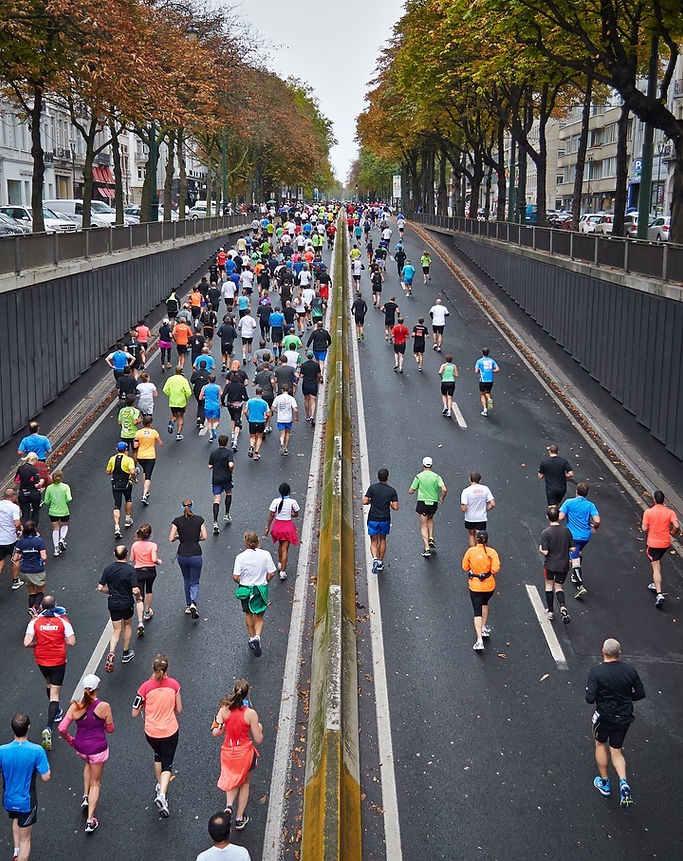
A marathon course is a measured route of 42.195 kilometres. Most major marathons are held on roads, although some events use trails, mixed terrain, closed racing circuits or point to point routes between towns and landmarks. The course is usually marked in kilometres, miles, or both, with marshals, timing mats, water stations, medical points and spectator areas positioned along the route.
Road marathons normally begin with a mass start or staggered wave starts. Faster runners begin closer to the front, while slower runners, charity runners and walkers are usually placed further back to reduce congestion. The finish area is normally separate from the start system, with timing chips used to record each runner’s official time.
The route itself can change the character of the race. A flat city marathon rewards pace control and efficient running. A hilly course punishes poor preparation. A coastal or exposed route can be affected by wind. A hot race increases the importance of hydration and heat management. A trail marathon adds uneven ground, mud, navigation awareness and slower average speeds.
For the website, I would describe the “playing field” as the marathon route, rather than a pitch or court.
The key parts are:
Start line
Where runners gather by predicted finish time or race category.
Measured route
The full 42.195 km course, officially measured for recognised races.
Distance markers
Signs placed at regular intervals so runners can judge pace.
Aid stations
Water, sports drink, gels or food depending on the event.
Timing mats
Electronic checkpoints that record splits and confirm the runner completed the route.
Medical points
First aid, emergency support and withdrawal points for runners in trouble.
Finish line
The official end of the race, usually followed by medals, recovery areas and baggage collection.
Spectator zones
High energy areas where crowds support runners, often near landmarks, bridges, parks or city centres.

Simple Rules of Marathon Running
A marathon is a long distance running race over 42.195 kilometres, which is the same as 26 miles and 385 yards. The aim is simple: start at the official start line, follow the marked course, and cross the finish line in the fastest possible time.
Runners must complete the full course on foot. They may run, jog or walk, but they cannot use a bicycle, scooter, vehicle, skates or any other form of transport. In most mass participation marathons, walking is allowed as long as the runner stays within the event’s time limit.
The course must be followed exactly. Runners cannot cut corners, leave the route, take shortcuts, miss timing checkpoints or rejoin the race further ahead. Major races use timing mats along the course to check that each runner has passed key points.
Each runner usually wears a race number on the front of their clothing. This number identifies the runner and must not normally be swapped with another person without permission from the organiser. Many races also use a timing chip attached to the race number, shoe or bib.
At the start, runners are usually placed into waves or starting pens based on expected finish time. Faster runners start closer to the front, while slower runners and charity runners often start further back. This helps reduce crowding and makes the race safer.
Runners may take water, sports drinks, gels or food from official aid stations. Some races allow runners to carry their own drinks or energy gels. Outside assistance may be restricted, especially in elite competition, where taking drinks or pacing help from unauthorised people can lead to disqualification.
Pacemakers may be used in some races. These are runners who help others maintain a target pace, such as a 3 hour, 4 hour or 5 hour finish. In elite races, pacemakers must normally follow the event rules and cannot enter the race unofficially.
Runners must not block, trip, push, obstruct or deliberately interfere with another runner. Accidental contact can happen in crowded races, but deliberate interference can lead to removal from the race.
Headphones are allowed in many public marathons, but not all events permit them. Some races discourage or ban headphones for safety reasons, especially where runners need to hear marshals, emergency vehicles or instructions.
Most marathons have a time limit. A major city marathon may allow six, seven or eight hours, while smaller or more competitive events may close the course sooner. Runners who fall behind the cut off time may be moved onto pavements, collected by a support vehicle, or recorded as not finishing.
A runner officially finishes the marathon when they cross the finish line after completing the full measured route. Their result may be based on gun time, which starts when the race officially begins, or chip time, which starts when their own timing chip crosses the start line. For most ordinary runners, chip time is the fairest personal result.
Career & Income Opportunities in Marathon Running
Marathon running has one of the widest participation bases in sport, but one of the narrowest true professional income funnels. Millions of people run marathons, but only a small elite group earn meaningful personal income from racing. The important distinction is this: most marathon runners pay to take part, competitive amateurs may offset costs, sub-elite runners may win occasional money, and only elite professionals usually earn through prize money, appearance fees, sponsorship, grants or national funding.
Running / Competing Pathway
The marathon pathway usually begins away from the marathon itself. Most serious runners start with short road races, parkruns, school athletics, club running, cross-country, 5K, 10K and half marathon events before moving up to the full distance. This matters because a good marathon runner needs endurance, pacing control, efficient technique, mental discipline and years of accumulated training, not just the ability to suffer through one long day.
At beginner level, there is normally no income. The runner pays for shoes, clothing, race entry, travel, nutrition, watches, club membership and sometimes coaching. Charity runners may raise large sums, but that money belongs to the charity, not the runner. It can build public profile, confidence and contacts, but it should not be confused with earnings.
At club and strong amateur level, runners may begin to win trophies, age-group prizes, vouchers, race entries, small local cash prizes or running shop support. This is still not professional income. A fast club runner might occasionally receive free kit, discounted shoes, free race entry or travel help, but most will still spend more on the sport than they earn from it.
At sub-elite level, money starts to appear but remains unreliable. A strong regional or national-level runner may enter races with cash prizes, receive travel support, be invited into elite start fields, or receive help from a club, sponsor, local business or specialist running shop. This stage can look professional from the outside, but many athletes still work full-time or part-time jobs.
True professional marathon running begins when the athlete can generate income from a combination of race fees, prize money, sponsorship, grants, federation support and appearance payments. World Athletics Label marathon races have formal prize structures at Elite and Gold level. For 2025 Label Road Races, the minimum first-place prize for an Elite Label marathon was $15,000 per sex, while a Gold Label marathon required $50,000 for first place per sex, with money down to eighth place.
Major marathons can pay much more. Boston lists open division prize money of $150,000 for first place, $75,000 for second and $40,000 for third, with additional money for wheelchair, masters and para divisions. London is listed by the Abbott World Marathon Majors as having elite runners competing for US$308,000 in prize money. These are elite figures, not normal runner expectations.
Prize Money: What It Really Means
Prize money is often misunderstood. A race advertising prize money does not mean most runners have a realistic chance of earning it. In a major marathon, the money is usually concentrated among the fastest finishers, often international elites. Some races also offer separate prize categories for national athletes, local residents, masters runners, wheelchair athletes, para athletes or non-binary categories, depending on event rules.
For ordinary runners, prize money should be treated as a bonus, not a career plan. A runner has to be very fast before prize money becomes a serious income stream. Even then, the cost of travel, accommodation, coaching, physio, race entry, nutrition and lost work time can eat into winnings quickly.
The realistic prize-money ladder is:
Recreational runner: no prize money, pays to enter.
Club runner: possible trophies, vouchers, age-group awards, small local prizes.
Strong regional runner: occasional local race wins, small cash awards, possible free entry.
Sub-elite runner: entry into stronger fields, travel help, domestic prize chances.
National elite runner: championship selection, federation support, bigger race invites.
International professional: major race prize money, sponsor contracts, appearance fees and bonuses.
Sponsorship Pathway
Sponsorship in marathon running works at several levels. At the bottom end, it may simply mean discounted shoes, a free vest, race entry support or social media ambassador codes. This is useful, but it is not a wage.
Local sponsorship is more realistic for strong club runners, charity runners with a public story, coaches, running influencers or athletes who represent a town, club or cause well. A local gym, physio clinic, sports shop, nutrition brand or small business may support a runner in exchange for visibility.
Elite sponsorship is different. Professional runners may have shoe contracts, clothing deals, nutrition partners, appearance obligations, media commitments and performance bonuses. The strongest marathoners are valuable because they can win major races, break records, appear in advertising and give a brand credibility among serious runners.
World Athletics rules recognise the athlete’s right to wear personal sport manufacturer sponsor clothing during competition and awards ceremonies, subject to marketing and advertising regulations. Race organisers cannot simply force athletes to cover personal sponsor logos unless the logos breach the rules.
Appearance Fees and Bonuses
Appearance fees are payments made to attract elite athletes to a race. A famous marathon runner may be paid just to start because their presence improves the event’s media value, competitive field and sponsor appeal. These fees are normally negotiated privately by the athlete, agent or representative.
Appearance money sits above normal prize money. A runner might receive travel, hotel, hospitality, a start fee, then still compete for prize money and performance bonuses. Bonuses may be offered for course records, national records, world records, time targets or finishing position.
This is almost entirely an elite-level system. A normal amateur should not expect appearance money. A sub-elite runner may get free entry or travel help, but genuine appearance fees usually belong to recognisable national and international athletes.
Grants and Athlete Funding
Grants are not the same as prize money. They are support payments or services designed to help athletes train, travel, compete and stay in the sport. They may come from national governing bodies, Olympic programmes, charities, foundations, universities, local authorities, clubs or private supporters.
In the UK, UK Sport describes direct athlete funding through Athlete Performance Awards, paid directly to athletes and funded by National Lottery income, to support living and sporting costs for athletes pursuing Olympic, Paralympic and major championship success. England Athletics also has talent and performance investment, but it explains that Sport England talent investment supports programmes, hubs and services, not individual athlete grants in the same way as UK Sport funding.
In the United States, the USATF Foundation supports elite athletes through monetary grants and career support, while its Elite Athlete Development Grant criteria favour athletes ranked near the top nationally, recent leading NCAA performers and athletes training for World Championships or Olympic Games. The Road Runners Club of America also runs a RunPro grant, with annual $5,000 grants for eligible post-collegiate distance runners pursuing elite careers.
The practical warning is simple: grants support serious athletes, but they are competitive, selective and usually linked to performance level. They are not a general income route for ordinary marathon runners.
Coaching & Training Pathway
Coaching is one of the strongest income routes in marathon running because the customer base is huge. Most runners will never earn from racing, but many will pay for help to finish their first marathon, beat a personal best, avoid injury or qualify for a major event.
The route usually begins with personal running experience, club involvement, assistant coaching, formal coaching qualifications and a clear niche. A coach might specialise in first-time marathoners, older runners, charity runners, women’s running groups, injured runners returning to training, corporate running clubs, military fitness candidates or advanced runners chasing qualifying times.
Income can come from one-to-one coaching, group sessions, online training plans, club programmes, video calls, training apps, corporate wellness programmes, ebooks, courses or paid newsletters. The best coaching businesses are not built only on being fast. They are built on communication, trust, planning, safety, consistency and results.
Event Work and Race Organisation
Marathon running creates a large event economy. A major race needs organisers, route planners, permit specialists, traffic management teams, timing companies, medical teams, stewards, announcers, photographers, videographers, charity coordinators, sponsor managers, volunteers, baggage teams, registration staff and security.
This route can be more realistic than becoming a professional runner. Someone who loves marathon running but is not elite can still build a career inside the sport by working for race organisers, local councils, event companies, sports charities, timing providers, running clubs, tourism bodies or sports marketing agencies.
At small-event level, income may begin with casual work, weekend event staffing or freelance photography. At higher levels, it can become full-time work in event operations, sponsorship, logistics, route safety, participant experience or charity partnerships.
Content Creation & Media
Marathon running is well suited to content because runners search constantly for training advice, shoe reviews, race plans, injury prevention, nutrition, pacing strategy and honest event reviews. A creator can build income through YouTube, blogs, newsletters, podcasts, affiliate links, brand sponsorships, coaching funnels, paid plans or race-day media.
This route does not require elite speed, but it does require credibility. A slow runner can still build a strong audience if the content is useful, honest and specific. The best angle is usually not “watch me run,” but “here is what this training block costs, what went wrong, what improved, what kit worked, what race entry was like, and what a beginner should know before trying it.”
Charity and Fundraising Roles
Marathons are powerful charity machines. The runner may not earn personal income from fundraising, but the fundraising ecosystem creates jobs around campaign management, charity places, donor pages, corporate teams, event hospitality, supporter packs and post-race stewardship.
London Marathon’s profile within the World Marathon Majors notes that runners have raised more than £1 billion for charities. For a reader seeking a career around marathon running, charity sport management can be a serious route, especially through large charities, hospitals, research foundations and community organisations.
Support Services Around Marathon Running
Marathon runners spend money trying to stay healthy and improve performance. This creates income opportunities for physiotherapists, sports massage therapists, strength coaches, podiatrists, nutritionists, gait analysts, running shop staff, footwear specialists, sports psychologists, recovery product companies and travel providers.
These roles usually require proper training, qualifications or professional registration. They are not “easy side hustles,” but they can be more stable than trying to race for money. A physiotherapist who understands runners may earn from a broad client base for years, while even a talented runner may only have a short competitive peak.
The Honest Income Summary
Marathon running is excellent for participation, personal challenge, charity visibility and coaching demand. It is weak as a direct athlete income route unless the runner becomes very fast.
For most people, the best money is not in winning marathons. It is in coaching runners, organising races, serving the event industry, building content, working with charities, selling specialist services or supporting runners with training, kit, health and logistics. The professional runner exists, but the professional marathon economy is much larger than the runner at the front of the race.
MARATHON RUNNING
ORGANISATIONS
& LEAGUES
Here is a non-exhaustive set of organisations involved with Marathon Running worldwide.

World Athletics
World Athletics is the international governing body for athletics, including road running and the marathon. It matters to a potential professional because it controls the global rules, world rankings, records, competition standards, certified road events and the framework used by elite races. A marathon performance only carries full value when it is achieved on a recognised course under proper rules, especially if the athlete is chasing rankings, selection standards, records or international recognition.
Best for: understanding the global professional system, rules, rankings, records and recognised elite road racing.

British Athletics / UK Athletics
British Athletics is the public-facing national governing body for athletics in Great Britain and Northern Ireland, while UK Athletics handles many of the formal governance and performance functions. For a British marathon runner, this is the structure connected to GB & NI teams, international selection policies, elite performance standards, anti-doping duties, competition rules and national-level recognition. The Home Country bodies, such as England Athletics, Scottish Athletics, Welsh Athletics and Athletics Northern Ireland, are also important at club and development level, but the high-performance GB route sits with UK Athletics and British Athletics.
Best for: UK athletes aiming at national championships, GB selection, elite performance standards and official marathon recognition.

Athletics Canada
Athletics Canada is the national governing body for athletics in Canada and is useful for runners looking at a structured North American pathway outside the United States. Its road race label system, national championships and elite distance-running development help Canadian athletes find recognised races, build rankings and compete in properly organised events. For a marathon runner, Canada is especially interesting because it combines serious domestic racing with access to the wider North American road-running market.
Best for: Canadian athletes, recognised road racing, national championship routes and North American development outside the US.

USA Track & Field
USA Track & Field, usually known as USATF, is the national governing body for athletics in the United States. For an American marathon runner, this is the central organisation for national championships, selection systems, athlete membership, coaching education, officials, clubs and high-performance routes. The US has a large road-running market, strong university athletics culture, major city marathons, private coaching businesses and a growing sub-elite scene, but the formal national pathway still runs through USATF.
Best for: American runners seeking national recognition, championships, elite qualification routes, coaching education and official development.

Ethiopian Athletics Federation
The Ethiopian Athletics Federation is another essential organisation in world marathon running. Ethiopia has one of the strongest distance-running traditions in the world, with Olympic, World Championship and major marathon success across generations. For a potential professional, Ethiopia matters because it shows how a national system can become a serious international pipeline, particularly when talent identification, high-altitude training, racing culture and international management all connect.
Best for: Ethiopian athletes, East African marathon development, national selection insight and understanding one of the world’s deepest distance-running systems.

Australian Athletics
Australian Athletics is the national governing body for athletics in Australia. It is important for marathon runners because Australia has a serious endurance culture, strong club structures, national championships, Olympic pathways and increasing international visibility through major road events. The Australian route can be useful for athletes who want a clear national federation structure while also building income through coaching, club work, event participation, sponsorship and media.
Best for: Australian athletes, Oceania representation, national marathon championships and structured endurance development.
.png)
Athletics Kenya
Athletics Kenya is one of the most important national athletics bodies in world distance running. Kenya is a global marathon power, with a deep culture of high-altitude training, competitive domestic fields, strong athlete camps and a long history of producing major marathon winners. A Kenyan athlete aiming for the professional marathon route must understand Athletics Kenya’s role in national regulation, team selection, road race oversight and official recognition.
Best for: Kenyan athletes, East African distance-running pathways, elite road-running culture and serious marathon development.

Japan Association of Athletics Federations
The Japan Association of Athletics Federations, or JAAF, is highly relevant because Japan has one of the most developed road-running cultures outside East Africa. Japan’s marathon scene is tied to strong domestic races, corporate running teams, university distance running, disciplined coaching systems and a serious public appetite for endurance sport. A potential professional should study Japan because it shows that marathon careers can be shaped not only by prize money and sponsors, but also by institutional support, employer-backed teams and national federation structures.
Best for: Japanese athletes, Asian marathon development, corporate running pathways and high-volume road-racing culture.
Athletics Integrity Unit
The Athletics Integrity Unit is not a competition body, but it is essential for any serious professional marathon runner. Once an athlete moves into international-level competition, anti-doping rules, testing, whereabouts obligations, supplement risk, medical exemptions and support-person responsibilities become part of professional life. A runner cannot treat this as paperwork. A missed test, a contaminated supplement, a banned medication or poor advice from a coach can damage or end a career.
Best for: professional compliance, clean sport education, anti-doping rules, athlete responsibilities and avoiding career-ending mistakes.

PROMOTE YOUR EVENT TO THE RIGHT SPORTS AUDIENCE
Contact us with your event details, and we can help feature suitable events on the most relevant sports page for our visitors.
SIMPLE PROCESS
Send us the event name, date and location.
RELEVANT PLACEMENT
We help match your event to the right sports audience.
EXTRA VISIBILITY
Give your event more exposure to interested visitors
(Subject to fees)